
When Aerospace Capital Concentrates, CRE Follows. Here’s What It Looks Like.
Trent Scott, CCIM | April, 2026
Most CRE markets are shaped by the usual forces: population growth, employment trends, interest rates, housing supply. But every so often, a market gets reshaped by something more concentrated, a single industry pouring in capital at a pace that bends the local real estate fundamentals around it.
That’s what’s happening on Florida’s Space Coast right now. And the patterns it’s creating are worth studying, whether you’re operating in Brevard County or watching a similar dynamic take shape in Huntsville, Colorado Springs, or anywhere else where aerospace and defense dollars are landing.
What’s Driving It
Over the past few weeks alone, four announcements landed in quick succession. Argotec, an Italian satellite manufacturer, opened its first U.S. production facility in Melbourne, Florida, with a $25 million investment and plans to triple its local workforce within two years. SpaceX continued building out its Gigabay at Kennedy Space Center, a 380-foot-tall, 815,000-square-foot integration facility that is part of a $1.8 billion Starship investment on the Space Coast.
Meanwhile, Amazon advanced plans for a new warehouse in Titusville tied to its Leo satellite constellation (formerly Project Kuiper), adding to the $140 million the company has already committed to payload processing at KSC. And Blue Origin filed with the FAA to build a second launch tower at Cape Canaveral, with a 500-foot umbilical tower and 600-foot lightning protection structure, expanding on the more than $3 billion the company has already invested in its Space Coast manufacturing and launch operations.
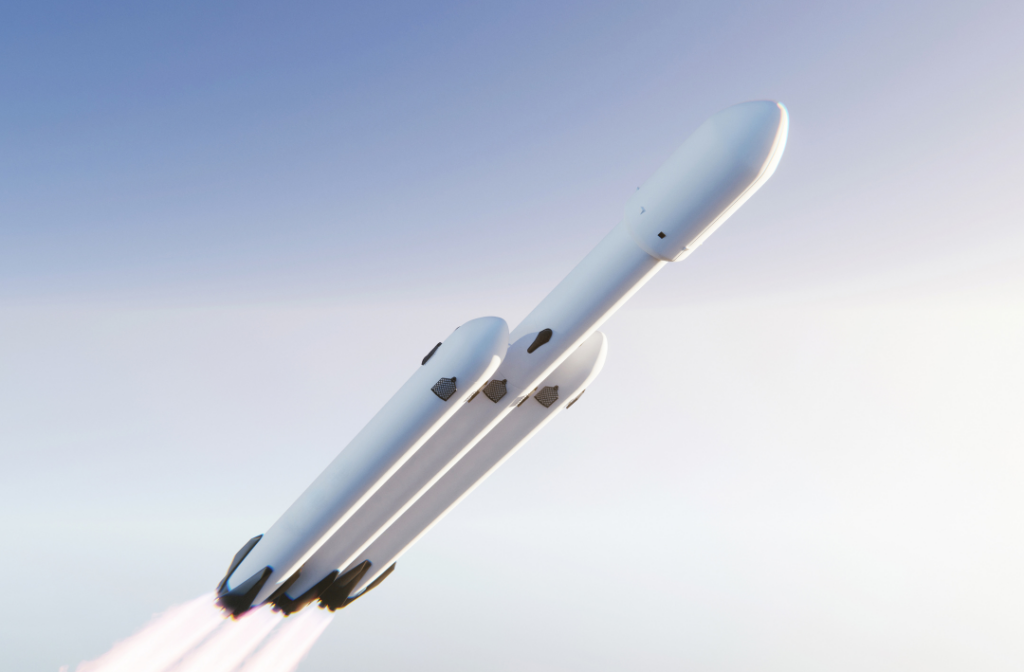
“This isn’t isolated activity, it’s just a part of a coordinated surge of capital across aerospace, advanced manufacturing, and space focused logistics. The Artemis program has begun recapturing the public’s focus on going back to the moon, but this time the private sector is coming too, and in a big and permanent way.”
— Trent Scott, CCIM, LinkedIn
Space Florida reported more than 220 aerospace projects in its pipeline at the end of 2025, representing $6 billion in projected investment. Brevard County recorded 109 orbital launches last year. The region’s identity has expanded well past launch operations. Companies are now building, testing, processing, and launching hardware within a 40-mile radius of the Cape.
What It’s Doing to the CRE Market
The real estate numbers tell you how far this has already gone.
Brevard County’s industrial vacancy sits at 3.5%, less than half the national average of 7.5% (per JLL’s year-end 2025 numbers). Trailing 12-month net absorption totaled 191,000 square feet, driven mostly by logistics and specialized manufacturing users, while only 101,000 square feet was delivered over the same period. New construction remains thin at roughly 320,000 square feet countywide. The pipeline is constrained relative to demand, and much of the recent delivery has been logistics-oriented, leaving specialized aerospace users competing for a shallow pool of suitable space.
Cap rates tell a similar story. Across 104 industrial sales in the trailing 12 months, the average cap rate came in at 6.9%, with individual deals ranging from 5.6% to 7.9%. Market-modeled pricing currently sits at $134 per square foot, up from a three-year average of $123. That kind of pricing movement in a secondary market doesn’t happen on its own. It’s being pulled by strong tenant demand, constrained supply, and the type of long-term lease commitments that aerospace tenants tend to sign.
The spillover effect matters too. The Space Coast labor pool draws from across the I-4 corridor. Engineers, technicians, and logistics workers commute from Orange, Seminole, and Osceola counties. When SpaceX, Amazon, or L3Harris adds hundreds of jobs, the demand for housing, retail, and service-sector space pushes west into greater Orlando. Industrial and flex space in Brevard has tightened enough that occupiers are starting to look at adjacent submarkets in eastern Orange County for proximity to the Cape without competing directly against aerospace tenants for limited inventory.
Hines is expected to break ground later this year on the first phase of Space Coast Innovation Park, with two buildings totaling 640,000 square feet and completion targeted for Q3 2027. At full buildout, the site can accommodate up to two million square feet. When a national institutional developer makes that bet on a market that was mostly off the radar five years ago, it tells you where the trajectory is heading.
Why This Matters Beyond Florida
For CORFAC members advising clients in other markets, the Space Coast offers a useful case study in what happens when a specific industry cluster reaches critical mass.
The pattern follows a fairly predictable sequence. Anchor tenants arrive with large commitments and long-term leases. That draws supply chain and logistics users who need proximity. The workforce grows, and residential, retail, and office demand follow. Infrastructure investment accelerates, often with public-private funding, which benefits all commercial users in the area. Eventually institutional capital notices the fundamentals and cap rates start compressing.
This same pattern is playing out, or beginning to play out, in other markets tied to aerospace and defense spending. Huntsville, Alabama, is seeing a similar concentration of activity around Redstone Arsenal and the Marshall Space Flight Center. Colorado Springs continues to absorb Space Force-related investment. Tucson and Albuquerque are picking up defense-adjacent manufacturing. If your clients own or occupy industrial space in or near any of these corridors, the Brevard experience is a useful reference point for what the next few years might look like.
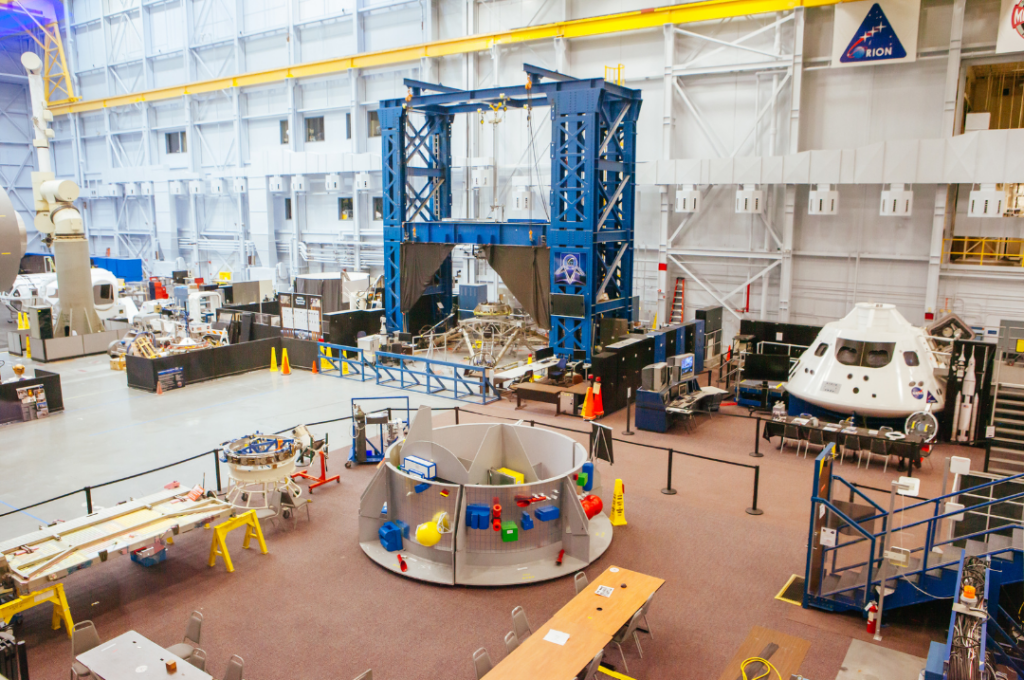
The specifics will differ by market. But the underlying dynamic is the same: when billions in long-cycle capital land in a concentrated geography, the CRE effects compound, and they tend to outlast a typical market cycle.
This blog was initially published on the CORFAC International website, and can be viewed here.