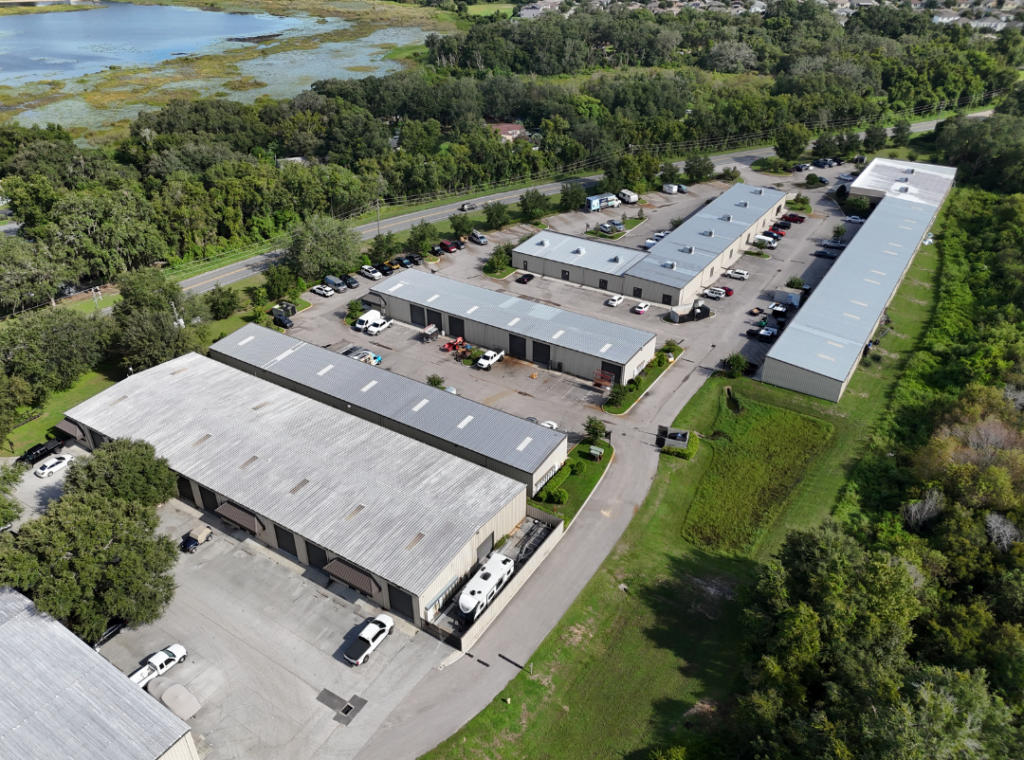
Why Small-Bay Flex Rents Keep Rising in Central Florida
Bryan Richardson | April, 2026
If you’ve been in the market for small-bay flex space anywhere in Central Florida over the past 12 to 24 months, you’ve probably had the same reaction: how are rents still going up?
At first glance, it doesn’t seem to make sense. Industrial vacancy has climbed, there’s been a wave of new construction, and a lot of headlines point to the market cooling off. But that only tells part of the story.
When you zoom in on small-bay flex space, typically under 20,000 square feet, you are looking at a completely different segment. In that segment, rents are not just holding, they are still moving up.
A Tale of Two Industrial Markets
The simplest way to understand what is happening is that big-box industrial and small-bay flex are no longer moving together.
Most of the new development over the past few years has been large-scale distribution buildings driven by e-commerce and logistics demand. That is where capital has gone and what has been delivered.
Small-bay flex has largely been left behind. Not because there is no demand, but because the economics are tougher. Higher costs per square foot, smaller deal sizes, and more hands-on management make it a less attractive development play.
The result is pretty straightforward. Very little new small-bay inventory has come online, while demand has continued to build.
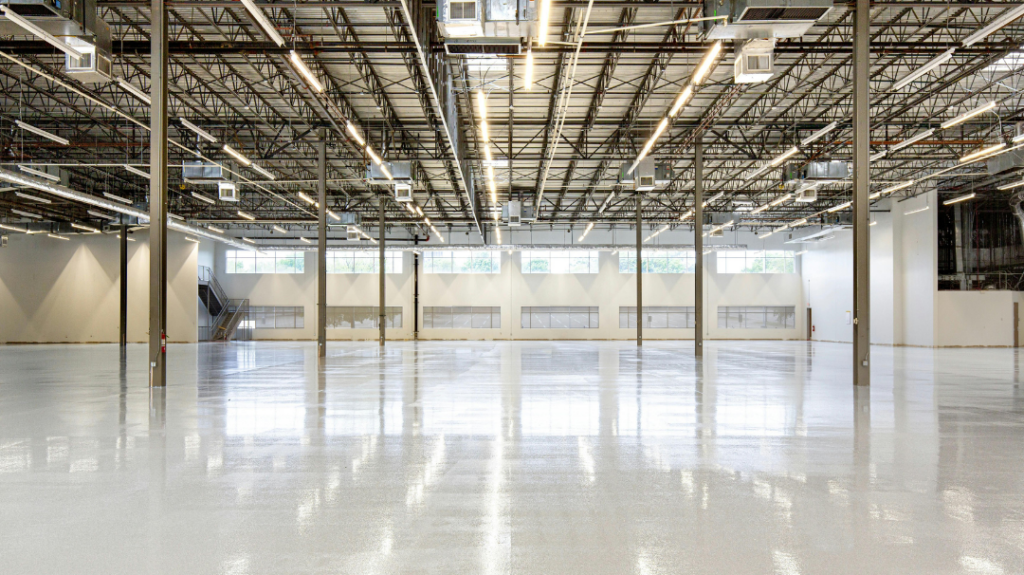
Demand Is Still There
The users driving this segment are different from the big-box tenants. This is not a national distribution company looking for multiple dock high bays. It is local businesses. HVAC companies, plumbers, electricians, contractors, small e-commerce operators, and even showroom or personal training concepts.
In a market like Orlando, that demand is supported by population growth, business migration, and a strong local service economy.
Most of these users are not looking for 50,000 square feet. They need something in the 1,500 to 5,000 square foot range and they want to be close to where they operate.
That is exactly where supply is the tightest.
Tenants Are Getting Pickier
Another shift that has become more obvious is that tenants are more selective than they used to be.
They are paying closer attention to clear height, layout, access, and overall presentation of the space. Location matters more too, especially access to major roads and proximity to rooftops.
This has created a gap in the market. Well-located, functional flex space is pushing higher rents, while older or less efficient product still sees increases but with more pushback.
In core locations, flex space is no longer viewed as a cheap option. It is becoming a more competitive, higher-quality product.
What We Are Seeing on the Ground
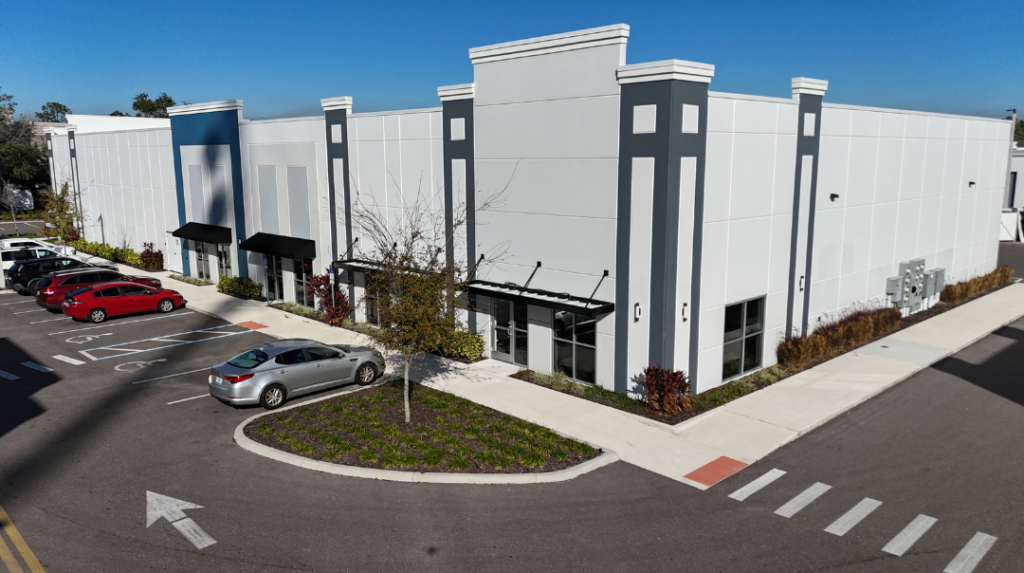
Sand Lake Business Center
You can see this play out clearly across different submarkets.
In Groveland at Hunt Industrial Park, demand continues to come from service-based and blue-collar users who want to be near growing residential areas but cannot justify Orlando core pricing. There is very little competing inventory in that part of the market, which gives ownership the ability to push rents while still maintaining occupancy.
We are seeing more tenants renew at higher rates simply because there are not many comparable alternatives. At the same time, some tenants are asking for short-term extensions while they look for space, and in many cases they are struggling to find a better option.
In Orlando at Sand Lake Business Center, the conversation is a little different but leads to the same result. Many of the existing tenants signed leases at rates three years ago that are now well below market. As those leases roll, ownership is bringing rents up to current levels, and the increase can feel significant.
The tenant mix is also shifting toward more service-oriented users and businesses that value being close to I-4, the tourist corridor, and a strong labor base. Even at higher rents, demand is still there because newer, well-positioned options are limited.
Why It Feels Expensive
For tenants, the biggest challenge is how quickly rents have changed.
A lease that was signed a few years ago in the low to mid teens per square foot is now resetting closer to the high teens or low twenties. That jump feels aggressive, but in most cases it is simply catching up to where the market already is.
The combination of limited supply, steady demand, and higher replacement costs has reset pricing expectations.
According to Lisa McNatt with CoStar Analytics, “Orlando’s annual rent growth is 4.7%, the fastest among Florida’s primary markets and among the top five in the nation.”
What Happens Next
Looking ahead, it is reasonable to expect rent growth to slow down compared to the past few years. But without meaningful new supply, there is not much pressure for rents to come down, especially in well-located submarkets.
What is more likely is a period of steady growth, continued adjustments on older leases, and ongoing competition for the better spaces.
The Bottom Line
Small-bay flex space in Central Florida has shifted from being overlooked to being one of the more competitive parts of the industrial market.
It is not the cheap option it used to be. It is a limited, in-demand product, and pricing is starting to reflect that.
If you are a tenant, waiting usually does not make the search easier. If you are an owner, understanding how to position your space and tenant mix is more important than ever.
If you are evaluating flex space in Central Florida, whether that is in Orlando or growing submarkets like Groveland, having a clear read on pricing, availability, and timing can make a big difference in the outcome.
At FCPG, we are actively leasing small-bay flex across multiple submarkets and working with both tenants and ownership groups on navigating this shift in the market.
If you’re looking for a current snapshot of availability, comparable lease comps, or have small bay product to lease, feel free to reach out—I’d be happy to share insights and help position your asset for maximum exposure.