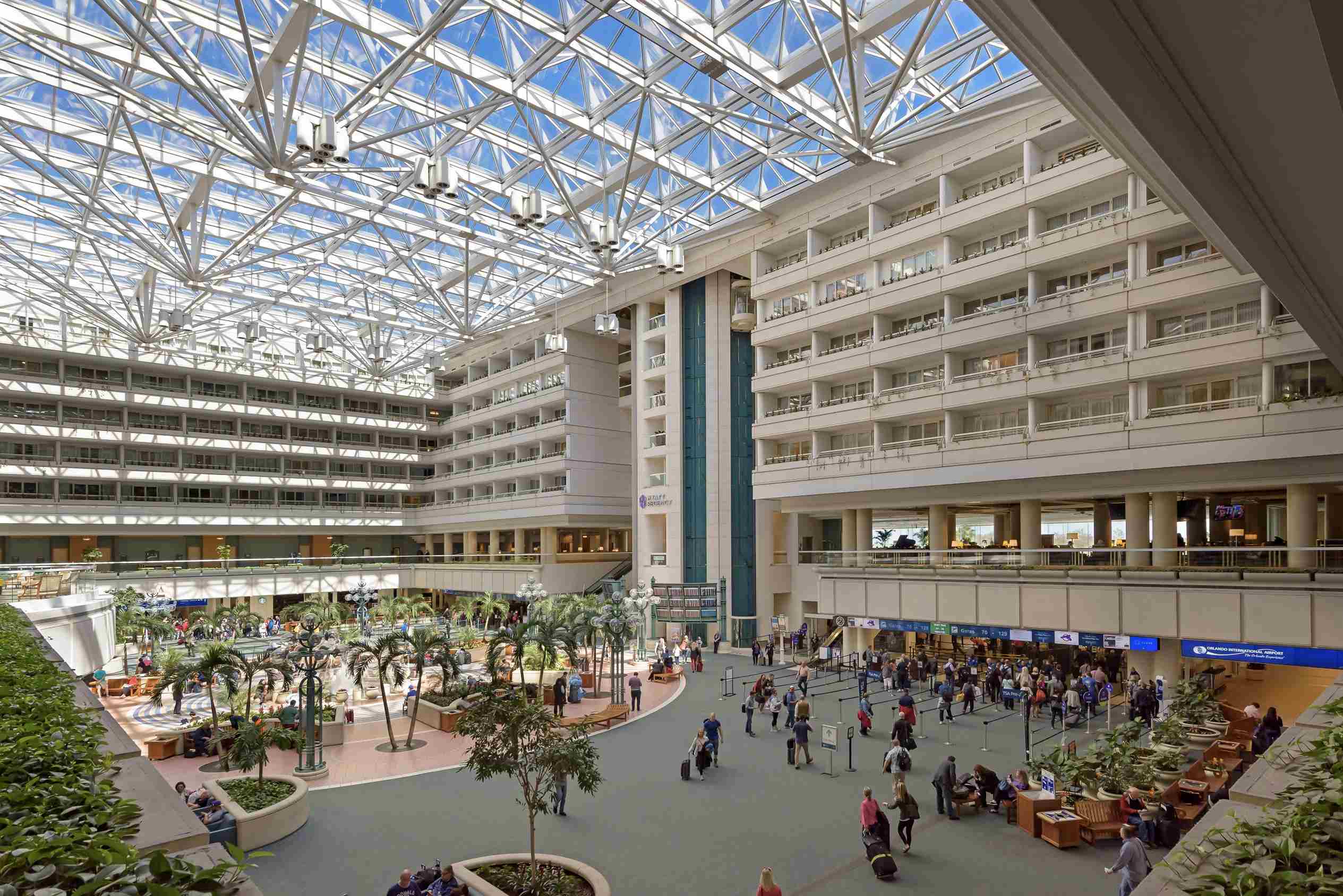
As a proud (and fortunate) member of the “I’ve been in more than 50 international airports” club, with Orlando International Airport as my home base for most of it, I’ve gone through allllllll the emotions since talks of its terminal modernization and concessions overhaul plans began.
We know: Airports are complicated. Renovations are disruptive. Concession programs are political. And when the “improvements” finally happen, we’re left with something shinier and newer, but somehow less itself; less soulful.
That fear has definitely been present for me with MCO. But I’s happy to admit that the fear keeps lessening as we get further along.
As MCO’s overhaul moves forward, the concession lineup is what excites me most! It includes a long list of Orlando and Central Florida native brands: Otto’s High Dive, Smoke & Donuts, Maxine’s on Shine, Piggza, Kelly’s Homemade Ice Cream, Black Bean Deli, Stasio’s Italian Deli, SoDough, The Milkhouse, Bricks & Bowls, ZaZa Cuban Café, 4 Rivers Smokehouse, Eola Wine Company, Hinckley’s Fancy Meats, Jam-Eng, Old Jailhouse, Writer’s Block Bookstore, and The House on Lang.
That is not one or two local names sprinkled between national chains so everyone can say they checked the “local” box. That is a real tenant mix.
And the bigger story is that MCO may become one of the most powerful growth platforms these businesses ever touch.
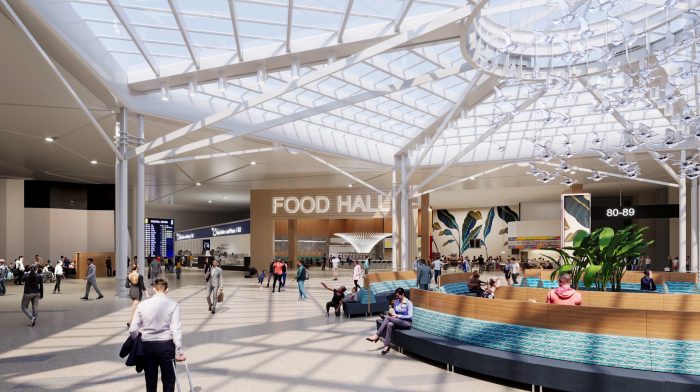
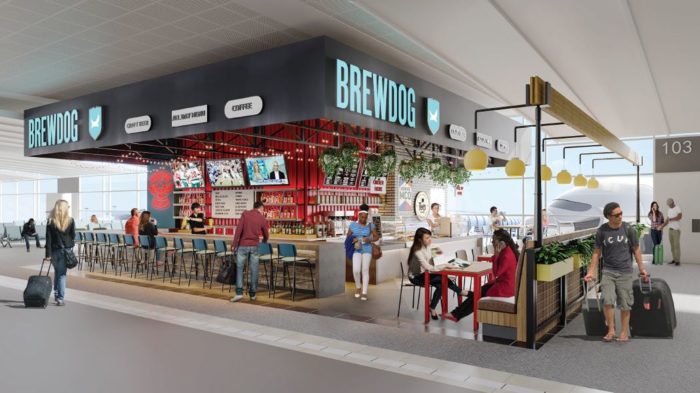
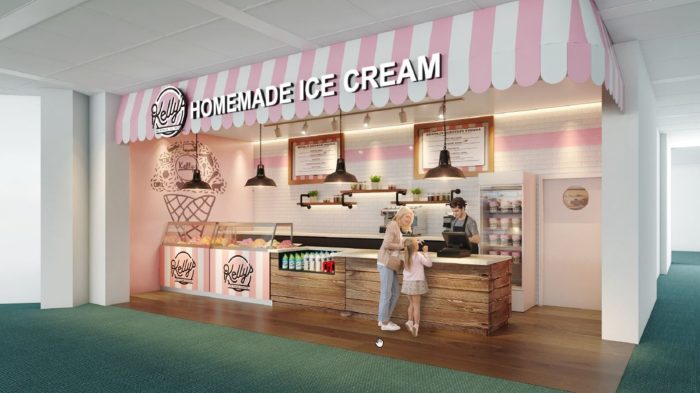
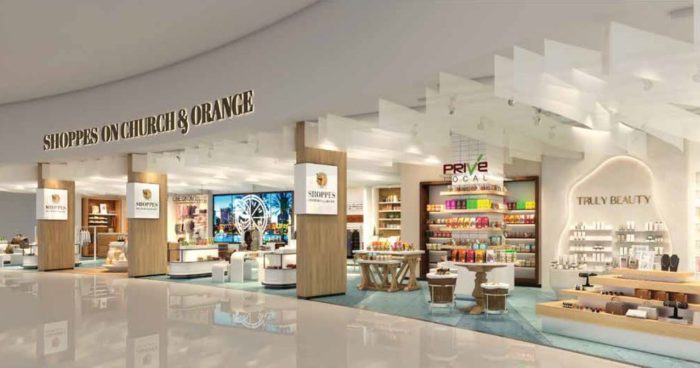
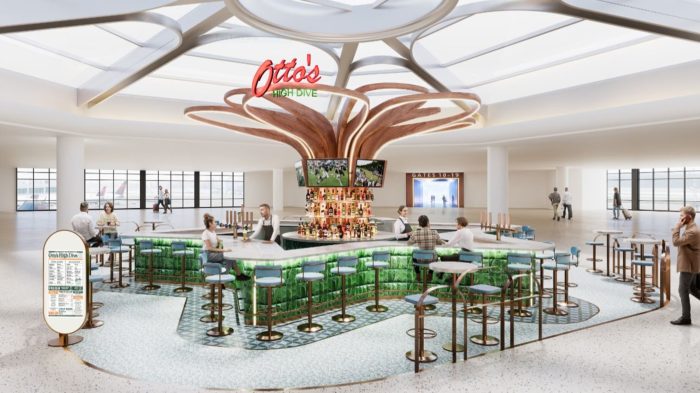
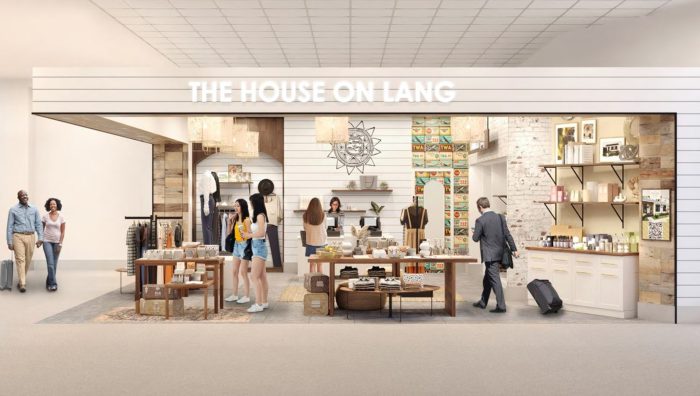
©Greater Orlando Aviation Authority
Airport real estate is not like opening another storefront. The visibility is constant. The customer volume has literally no equivalent. MCO is not just busy, it ranked among the 10 busiest airports in North America for 2024 passenger traffic, according to Airports Council International-North America, and Orlando International Airport reports serving nearly 58 million passengers a year. For a local brand, that is an audience traditional expansion could never replicate. And for many of those travelers, MCO is either their first or last impression of Orlando.
So when a local brand lands inside MCO, it is not only a chance to sell a lot of product. It is positioning that brand as part of the city’s identity.
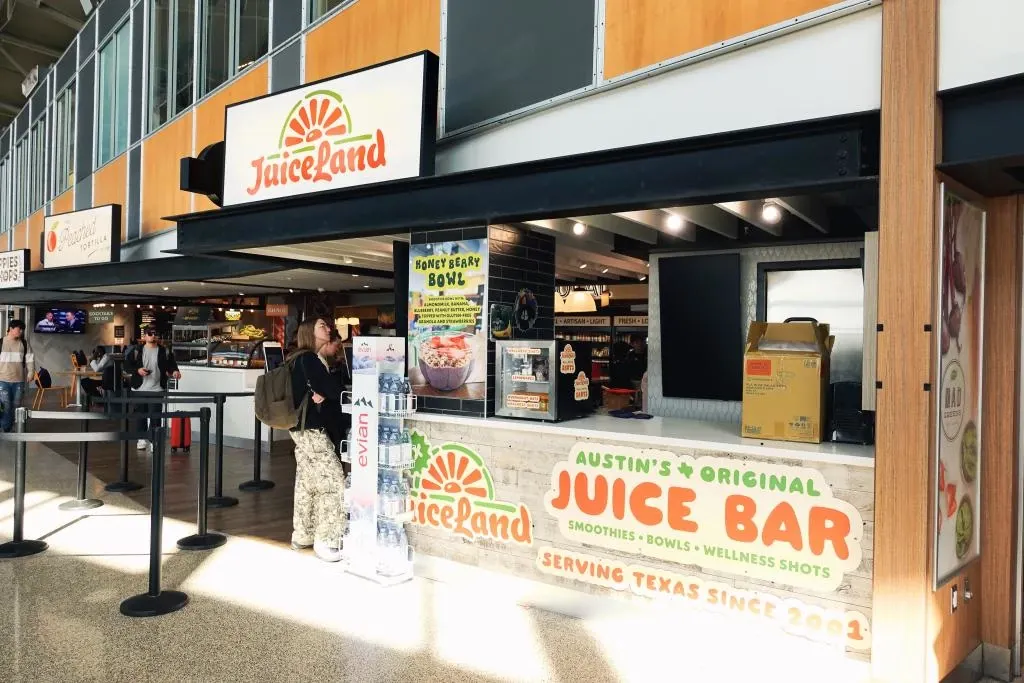
©Greater Orlando Aviation Authority
©Austin-Bergstrom International Airport
Austin-Bergstrom is the airport example I keep coming back to because it got the assignment early. Since opening in 1999, AUS has treated the terminal as part of the city experience, not just the place you pass through before getting to it. With Delaware North as a long-time concession partner, Austin built local food, local retail, live music, and cultural programming into the terminal experience from the beginning.
SSP America is another concessionaire worth noting, not just because SSP is one of MCO’s selected concession partners, but because they were early to packaging “local” as a repeatable airport strategy. In 2012, SSP announced a major Phoenix Sky Harbor deal built around 17 local culinary artisans, including local restaurants, coffee houses, bakeries, breweries, taquerias, and wine bars. Today, SSP openly positions its model around delivering a “Taste of Place.”
Operators like SSP are responding to consumer trends, and those trends are moving faster than most markets can keep up with. That pressure is even more obvious across hospitality, where the way people eat, drink, socialize, and gather never stops shifting. Airports like Austin-Bergstrom, Portland International, and San Francisco International helped prove that terminals do not have to feel cold, interchangeable, or stuck with low-quality options. Travelers want something better now, and the industry knows it.
But the magic is not the concession strategy.
The magic is the brand equity these local founders have been building long before the idea of operating in an airport ever came to mind. As I often believe, the real credit belongs to the founders and operators who built brands strong enough to be identified for such a special opportunity in the first place.
We have already seen what this can look like locally. ZaZa Cuban Café opened at MCO in 2009, and co-founder Ruben Perez previously told the Orlando Business Journal that by 2017, the brand was on track to break $4 million a year from 1,000 square feet at the airport.
That is not a badge of honor. That is a growth platform.
But, of course, the devil is in the details.
Airport deals are complicated. They involve stressful procurement processes, licensing agreements, ABSURD buildout costs, operational requirements and restrictions, revenue sharing, and a whole lot of stakeholders with sometimes drastically different priorities. The brand hanging on the sign, in this scenario, is only part of the story.
Who operates the location? Who controls the menu and quality? How are the economics shared? Does the original owner get meaningful long-term upside? Does the airport version protect what made the neighborhood version special?
Those are the questions to ask before fantasizing about being the next local brand to get into the airport.
Or better yet, ask your neighbors who are living it as we speak. #keepitlocal