
Central Florida’s Multifamily Constraint Pockets
Jesse King | August, 2026
The story on Central Florida multifamily has flipped from too much construction to almost none, and that shift is the opening. Developers across the country have pulled back hard. National apartment starts fell to roughly 55,000 units in the first quarter of 2026, the lowest level since 2011 and a 73% drop from the early-2022 peak, according to CoStar data reported by CRE Daily.¹ When everyone stops building, the next delivery window belongs to whoever is willing to break ground now.
The pipeline is emptying fast
Orlando spent four years as one of the busiest apartment construction markets in the country. That era is closing. Cushman & Wakefield reports 11,007 units under construction across the metro in the first quarter of 2026, with construction activity down 34.1% year over year, the lowest volume since the development boom began in 2020.² Deliveries are following the same path: just 1,796 units came online in the first quarter, a 45.7% drop from a year earlier.²
Nationally the picture matches. The under-construction pipeline has fallen to about 579,000 units, down more than 50% from its 2023 peak.¹ The wave of supply that pressured rents is receding, and very little is lined up to replace it.
Demand keeps compounding
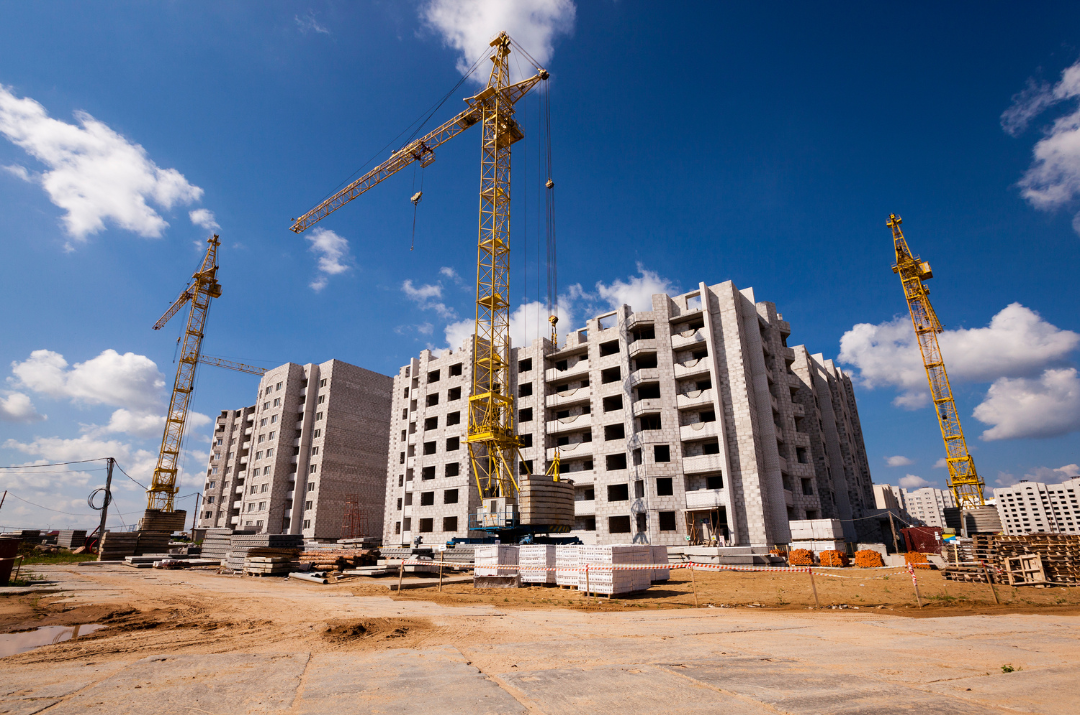

Orlando is not losing the demand that justified all that building. The metro added an estimated 64,800 new residents in 2025, and Orange County is planning for more than 500,000 over the next 25 years under its Vision 2050 framework.³ Job growth is doing the same work. Orlando led the nation in job creation in 2024, adding more than 37,500 positions, and major projects including Universal’s Epic Universe, Disney’s expansion, and Lake Nona Town Center are expected to generate close to 60,900 additional jobs by 2027, per the Orlando Economic Partnership.³
Those households need somewhere to live. Net absorption stayed positive through early 2026 at 1,867 units even as new deliveries slowed.² Demand is steady. The future supply to meet it is not.
The timing math favors ground-up
Development is a bet on the delivery window, not today’s rent roll. Orlando’s effective rents were down 2.1% year over year in early 2026 as the market worked through its last supply wave.² A project that breaks ground now, though, delivers in 2027 or 2028, into a market where the pipeline has thinned and CoStar expects rent recovery to take hold in high-demand metros with reduced development activity.¹
Florida policy is widening the opening. The Live Local Act now allows qualifying residential projects on many commercial and industrial parcels without rezoning, and it caps the municipality’s review and comment window at roughly 120 days so projects do not stall in administrative limbo. For builders, that means faster, more predictable entitlements and access to sites that were off the table a few years ago.⁴ For builders, that means faster entitlements and access to sites that were off the table a few years ago.
What it means for developers and landowners
The hardest part of development timing is holding conviction when the headlines are negative. Breaking ground into a soft market feels wrong, which is exactly why the competition thins and land, labor, and financing terms become more negotiable. Cost pressure eases when fewer projects are chasing the same trades and lenders.
Owners sitting on land or well-located commercial parcels have a decision in front of them too. A site may pencil for ground-up multifamily today under Live Local in ways it never did under the old zoning, and delivering into 2027 and 2028 puts new product in the market right as supply runs short.
The takeaway
Central Florida’s construction pipeline is contracting sharply while its population and job base keep expanding, and the projects that break ground in this window are the ones positioned to deliver into recovering rents. Underwrite the delivery date, not the current headline.
If you are evaluating a site for ground-up multifamily, or weighing whether to build, buy, or hold, FCPG can help you read the supply timeline and the entitlement path for your specific parcel. Reach out and we will map it together.